


UMD Scientist Awarded NIH Grant to Advance Research on Rare Form of Muscular Dystrophy
Cell Biology and Molecular Genetics Professor Kan Cao’s newly funded research builds on her progeria research to tackle another devastating pediatric disease.
University of Maryland Cell Biology and Molecular Genetics Professor Kan Cao has received an Exploratory/Developmental Research Grant (R21) from the National Institutes of Health (NIH) and the Eunice Kennedy Shriver National Institute of Child Health and Human Development (NICHD) to investigate the causes of LMNA-related congenital muscular dystrophy (L-CMD), a rare and devastating childhood disease with no approved treatments. The two-year award will support research aimed at uncovering disease mechanisms and laying the groundwork for future therapies.
“Families living with rare diseases face enormous challenges every day,” Cao said. “We're grateful for the opportunity to help answer fundamental biological questions that may ultimately improve patients' lives.”
L-CMD is a rare genetic disease that has no existing treatments. It causes severe muscle weakening and wasting in childhood. Many affected children are unable to sit up, crawl or walk independently, and the disease fatally deteriorates the heart. Little is known about the biology underlying L-CMD, and there’s virtually no existing research on treatments, Cao said.
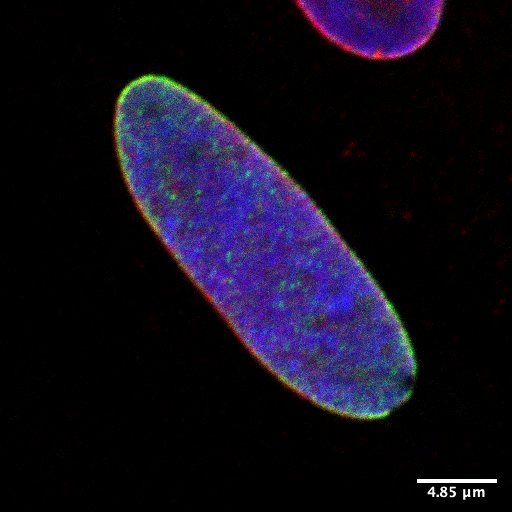
Cao’s new research will determine how a genetic mutation called R249W, which is linked to one-fourth of all L-CMD cases, affects muscle biology to cause disease. This mutation alters a gene called LMNA that encodes proteins called lamin A/C, which maintain the structure of the cell’s nucleus, coordinate the cell cycle, regulate genes and repair DNA. R249W-mutated cells are more oval-shaped, with lamins densely packed toward the ends, per Cao’s preliminary research, which was funded by the L-CMD Research Foundation—a group co-founded by Hannah Lowe (B.S. ’05, finance; B.A. ’05, French), whose son, Austin, was diagnosed with L-CMD when he was 5 months old.
Cao's laboratory, a leading research group in lamin biology, is uniquely positioned to pioneer L-CMD research because it has spent more than 20 years investigating progeria, a rare premature aging disease that is caused by mutations in the LMNA gene.
“The L-CMD Research Foundation gave us a small amount of seed money to get the project started,” said Catherine Harvey, a biological sciences Ph.D. student in Cao’s research group who led the preliminary studies. “We were just using the limited resources we could find in the lab to push the research forward.”
Now, with support from the NIH, Cao’s lab will study how R249W-related structural changes to the nucleus affect muscle function, muscle development, and lamin’s ability to bind to proteins and DNA. Collaborating with computational structural biology expert Brian Pierce, an associate professor in the Department of Cell Biology and Molecular Genetics with a joint appointment in the Institute for Bioscience and Biotechnology Research, Cao will also use artificial intelligence-driven modeling to test how the R249W mutation affects lamin’s structure and stability.
The ultimate goal is to develop treatments for L-CMD. So, Cao and her collaborators will test whether the R249W mutation can be corrected using gene editing to restore cells to their healthy states in cell cultures. She will use a method called adenine base editing, a recently developed gene-editing technique that is similar to CRISPR-Cas9 but less error-prone. This approach mirrors Cao’s prior research, which showed in animal models that adenine base editing could be used to treat Hutchinson-Gilford Progeria Syndrome.
As with her work on progeria, which unexpectedly led her to found a healthy-skin-aging company, Cao believes the L-CMD research will yield biological and therapeutic insights far beyond the rare muscle disease.
“After 20 years of researching progeria, I learned that studying rare diseases can teach us so much more in terms of normal human aging, cardiovascular disease and even neurological disease,” she said. “Nobody knows much about L-CMD yet, but I think the same will be true here, too.”